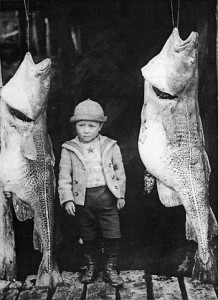
- Atlantic cod fishing in the 1500s
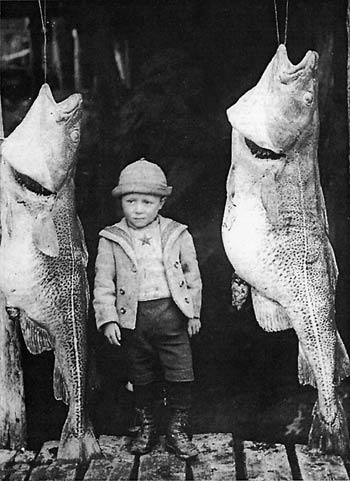
By the mid-1800s wind-powered schooners brought fisherman to the Grand Banks, where the early harvest methods included hand-lines, long-lines, and gillnets deployed from dories. The 1800s also brought technological improvements including “fish traps,” which increased efficiency. Anchored nets were placed close to shore where cod were known to migrate, then corralled and easily captured [1].
French steam trawler then appeared on the fishing grounds in 1906. These vessels dragged bottom trawls eliminating the need for bait and out-competing less sophisticated harvest methods. The bottom trawl increased landings but unlike earlier methods, increased by-catch and destroyed bottom habitats [1].
In 1954, the first factory-freezer trawler in the world fished the Grand Banks for cod. They were able to fish around the clock, year-round and in all but the worst weather. This technology dramatically increased fishing pressure on Atlantic cod [2].
References
- Lear, W. H. (1998) History of Fisheries in the Northwest Atlantic: The 500-Year Perspective. Journal of Northwest Atlantic Fisheries Science. 23: 41-73.
- Wright, M. (1997) Frozen Fish Companies, the State, and fisheries Development in Newfoundland, 1940-1966. Business and Economic History. 26: 727-737.