The Atlantic cod (Gadus morhua) has historically supported one of the largest marine fisheries, however, as with many commercially exploited species; it has undergone a significant reduction in recent years, which has resulted in the complete closure of some major fishing grounds [1].
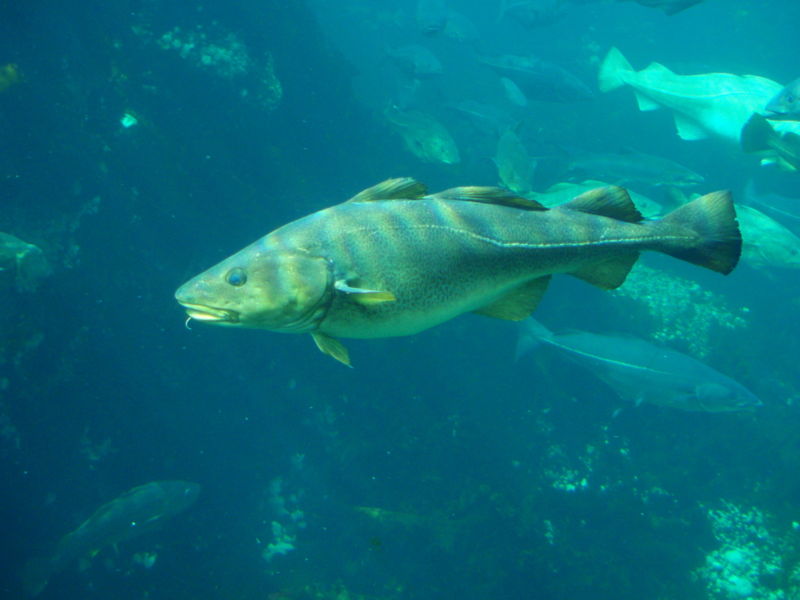
Atlantic Cod (Gadus morhua)
In 1992, the collapse of the cod stocks of the east coast of Newfoundland forced the Canadian government to take drastic measures and close the fishery, and today the marine ecosystem is still in a state of collapse [2].
The Canadian government had been warned by scientists and environmentalists that the cod stocks were overexploited and the fleets were employing destructive fishing practices. The advice given to significantly reduce quotas was dismissed, sighting the loss of jobs as too great a concern. The cost of their short term outlook and refusal to acknowledge ecological limits was devastating [2].
At present, the Atlantic cod is not subject to specific protection, but is listed by the International Council for the Exploration of the Seas (ICES) as below safe biological limits (SBL) with recruitment levels near the lowest on record [3].
References
- Casey, J. M and Myers, R. A. (1988) Near Extinction of a Large, Widely Distributed Fish. Science 281:690-692
- Hutchings, J. A. and Reynolds, J. D. (2004) Marine Fish Population Collapses Consequences for Recovery and Extinction Risk. Bioscience. 54 (4) : 297-309.
- Marteinsdottir, G. Ruzzante, D. and Nielsen, E. E. (2005) History of the North Atlantic Cod Stocks. ICES. [Online].